The number most buyers encounter first — Foster City's citywide median — lands somewhere around $1.5M depending on the month and data source. It sounds like a useful anchor. It isn't. Run the same February 2026 MLS data by property type and that single figure splinters into two markets with almost no overlap: condos and townhomes averaging $1.269M, and single-family homes carrying a median closer to $2.71M in the 94404 zip code. The gap between those two figures is larger than the entire median home price in most of San Mateo County.
That spread isn't a quirk of a slow month. It reflects something structural about how Foster City was built and what it contains. Understanding it is the starting point for any serious search here — not because one tier is better, but because they operate under fundamentally different rules, and those rules carry real costs.
Why the Gap Is This Wide
Foster City was master-planned around a lagoon system from the start, which means its housing stock runs in layers that don't naturally compress toward a midpoint. The oldest neighborhoods — The Islands, a 1970s community built around the canals connecting to Central Lake — contain single-family homes ranging from roughly $2M to $2.6M alongside townhomes and condos priced between $1M and $1.7M. Same community, two distinct products, a spread of $500K to $1.5M depending on which door you're standing in front of.
That pattern repeats across the city. Active listings as of mid-May 2026 show condos entering the market from below $700K — a one-bedroom at 1033 Shell Blvd #7 was listed at $588,888 — through $1.5M and above, while single-family homes generally start around $1.88M and run toward $3M at the upper end. Townhomes occupy a middle band, roughly $1.1M to $2M, depending on community, proximity to the water, and what the HOA controls.
| Property Type | Approximate Active Range (May 2026) | Feb 2026 Average / Median |
|---|---|---|
| Condos | ~$589K – $1.5M+ | $1.269M avg (MLSListings, 94404) |
| Townhomes | ~$1.1M – $2.0M | Included in above |
| Single-Family | ~$1.88M – $2.9M+ | $2.71M median (MLSListings, 94404) |
The citywide median straddles those ranges without accurately describing any of them. A buyer who arrives with a $1.5M budget expecting to sit near the middle of the market will find they are well positioned for attached homes and essentially priced out of detached ones. Those are different searches with different due-diligence checklists.
What the Attached-Home Tier Is Actually Selling
The attached-home market in Foster City is not a consolation bracket. Communities like Marina Point and Sea Colony sit directly on the lagoon, with HOAs that cover building earthquake and fire insurance, pools, playground access, private community beach access, and boat accessibility — amenities that would cost a single-family buyer considerably more to replicate. Meridian Bay, a 129-unit four-story building completed in 2001 near Leo J. Ryan Park, has offered two-bedroom units between 1,245 and 1,350 square feet in the $885K to $930K range. Harborside, a townhome community along Central Lake with a distinctly New England-influenced design, was recently listing a four-bedroom, 1,880-square-foot unit at $1.548M.
What separates these communities from each other — and what no list price reveals — is the scope of what each HOA actually governs. Some associations carry building insurance, shifting that cost off the unit owner entirely. Others manage lagoon-edge infrastructure: seawalls, bulkheads, common docks. When that infrastructure needs repair, the cost flows through monthly dues or a special assessment. A buyer reviewing HOA financials before close can see how well-funded the reserve actually is. In Foster City, that review matters more than in most other Peninsula cities because the waterfront adds a maintenance category most inland associations never deal with.
The Rules That Surface During Escrow
Three issues come up in Foster City transactions that buyers researching from a portal typically don't anticipate.
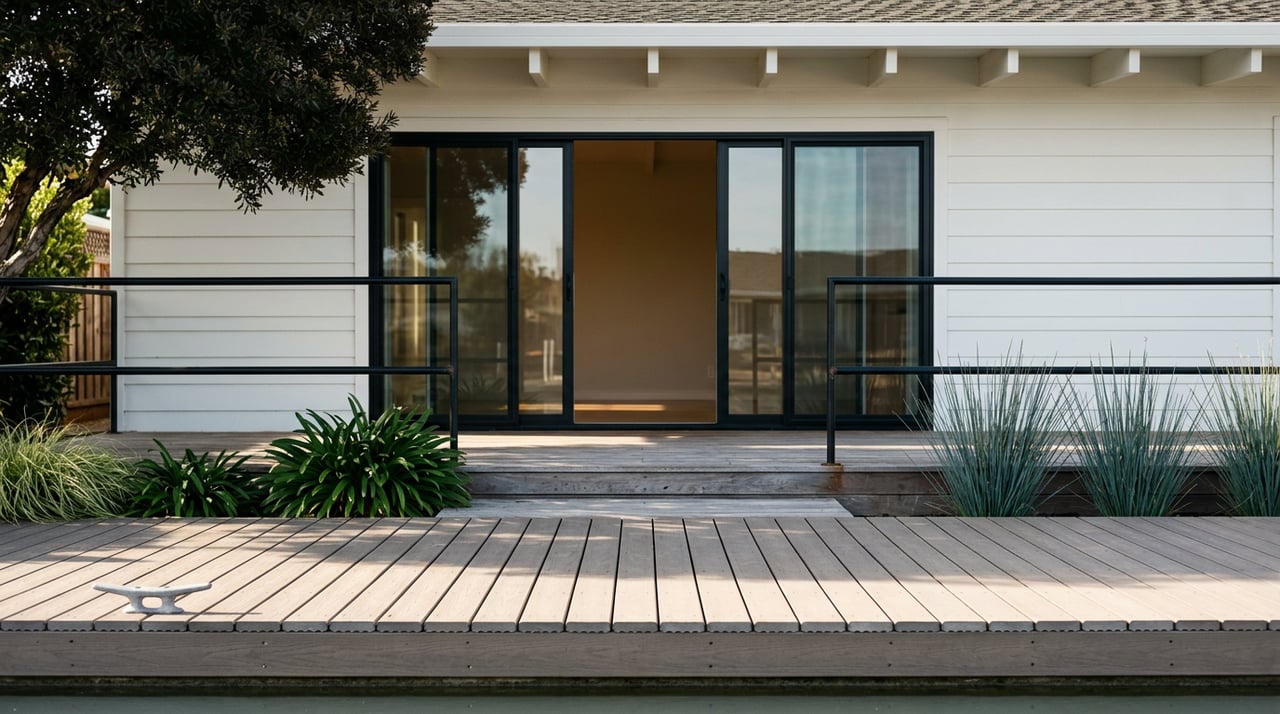
Dock rights are not uniform. Some waterfront properties carry deeded private docks. Others belong to communities where docks are HOA-owned with assigned slips — some of which have waiting lists. The relevant question isn't whether a dock exists but whether it is deeded to the property, whether it is permitted, and whether any easements affect access or cost-sharing for seawall repairs. Any work on a dock or bulkhead requires city approval; projects affecting the shoreline can also involve the Bay Conservation and Development Commission. Sellers are required to disclose permit history on dock structures, and buyers should confirm that past repairs carry proper permits before close.
Lagoon motor restrictions shape how the water can be used. Foster City prohibits gasoline and diesel motors on the lagoon. Only sail, electric, and human-powered craft are permitted, under a 5 mph speed limit. The city operates two public boat ramps — one at Boat Park on Bounty Drive and one at Leo J. Ryan Memorial Park — but neither resolves the restriction on the lagoon itself. Buyers who intend to keep a motorized vessel will need to factor in marina costs elsewhere on the Peninsula.
HOA warrantability affects how buyers finance. When a buyer applies for a conventional mortgage on a condo or certain townhomes, the lender evaluates the HOA alongside the borrower. The review covers the association's financial reserves, insurance coverage, owner delinquency rates, and whether the project meets agency guidelines. A project that fails that review is classified as non-warrantable, which limits financing to portfolio or non-QM lenders at higher rates, or to all-cash buyers. The density of HOA communities in Foster City means this comes up more frequently here than buyers expect. Checking a community's warrantability status before writing an offer is a ten-minute conversation with a lender. Discovering it during underwriting is not.
What the Single-Family Premium Pays For
Above roughly $2M, the structure shifts. Single-family homes in The Islands and comparable waterfront neighborhoods carry deeded dock rights on sheltered lagoon channels rather than shared access through an association. The trade-off is that dock maintenance, seawall condition, and any required permits become the owner's direct responsibility rather than a board's — which means those conditions appear in inspection reports and should be priced into any offer accordingly.
The lagoon-front single-family home also offers something attached communities cannot replicate: direct water access with no shared infrastructure, no association approval process for exterior changes, and full owner control over how the property is modified over time. For buyers who plan to renovate significantly or want fewer governing layers between themselves and the property, that flexibility is part of what the premium is buying.
For buyers comparing Foster City pricing to nearby cities, a useful data point: as of February 2026, attached-home averages in Foster City were higher than the averages reported for San Mateo, Redwood City, and San Mateo County overall. The city carries a premium across both tiers, not just at the top.
The Decision Is About Risk Distribution
The question a serious Foster City buyer is actually answering isn't whether they can afford the neighborhood. It's closer to: which set of obligations fits their situation, and have they priced all of them in?
A condo in Marina Point or Sea Colony comes with HOA coverage that moves certain large costs off the owner's plate. A single-family home in The Islands puts all of that responsibility back on the buyer, plus dock permitting and seawall upkeep. Neither structure is inherently the better choice. They represent different distributions of cost, risk, and control.
The buyers who run into friction in Foster City are typically the ones who evaluated the property without fully reading the HOA documents, or who didn't confirm dock status until after the purchase contract was signed.
Frequently Asked Questions
Does Foster City require flood insurance? Foster City's levee system is FEMA-certified and land inside the levee is classified as Zone X, where mandatory flood insurance is not required by the federal program. The city sits approximately 7 feet above sea level and continues levee improvement work. Individual lenders may have their own requirements, so it's worth confirming coverage terms with your lender during the financing process.
Can I use a gas-powered boat on the Foster City lagoon? No. City rules prohibit gasoline and diesel motors on the lagoon. Permitted craft include sail, electric, and human-powered vessels, all subject to a 5 mph speed limit. The city operates two public launch ramps: Boat Park at Bounty Drive and Leo J. Ryan Memorial Park.
What does "non-warrantable" mean, and why does it come up here? Fannie Mae and Freddie Mac set criteria that a condominium project must meet before a conventional loan can be issued against it. Projects with low reserves, high owner delinquency, or other structural flags may not qualify, which leaves buyers with fewer financing options and typically higher rates. Because Foster City has a high concentration of HOA communities, it comes up more often than in single-family-dominant cities. Checking a community's status before submitting an offer is straightforward; learning about it mid-escrow is not.
Are dock rights always included with a waterfront listing? No. Dock rights vary by property. Some waterfront homes carry deeded private docks. Others sit in HOA communities where dock access is shared, assigned by slip, or subject to a waiting list. Permit status matters as well — structures or past repairs without proper approvals are a disclosure and financing risk. Verify what is deeded versus shared, and request the permit history on any dock structure before removing contingencies.
Julie Flouty works with buyers and sellers across Foster City and the broader San Mateo Peninsula. If you're working through which tier of the Foster City market fits your timeline and priorities, reach out for a direct conversation about what's active, what's coming, and what each option actually costs to own.